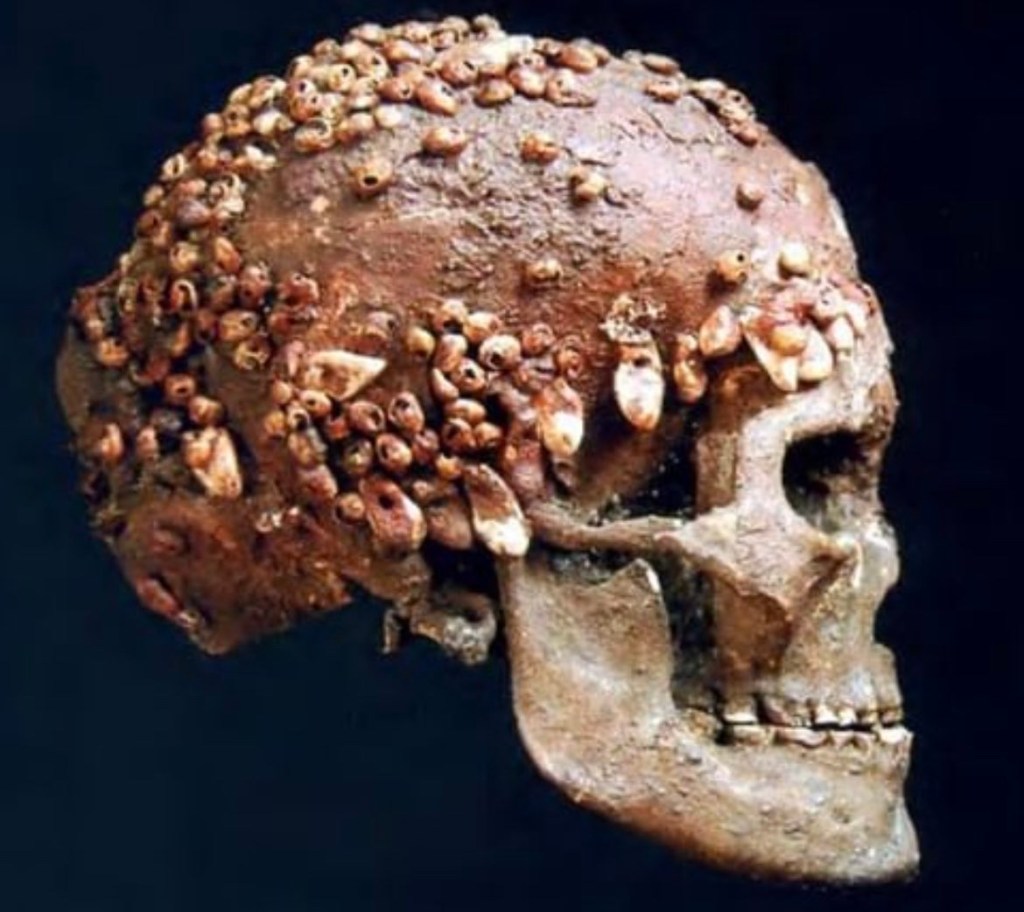
In the heart of Italy’s Balzi Rossi caves, a treasure from the annals of prehistoric history lay hidden for centuries, waiting to reveal its secrets to the world. Discovered in 1872 by the meticulous hands of archaeologist Emile Rivière, the skull of the “Donna del Caviglione,” or the Woman of Caviglione, is a testament to the rich tapestry of beliefs and customs that shaped the lives of Late Paleolithic people.
An Intriguing Unveiling
The discovery of the Woman of Caviglione’s skeleton was a momentous occasion, shining a light on a time long past when human civilization was still in its nascent stages. What makes her remains especially captivating is the extraordinary adornment that covered her skull: a mosaic of tiny marine shells and red deer teeth meticulously crafted into a mesmerizing funerary headpiece. This remarkable creation sparks the imagination and beckons us to ponder the significance behind its intricate design.
A Glimpse into Beliefs of the Afterlife
The Woman of Caviglione’s burial and the accompanying headpiece offer a tantalizing glimpse into the spiritual beliefs of her time. As we examine this intricate assemblage of natural materials, the question arises: what drove these prehistoric individuals to adorn the deceased in such a splendid manner? Could this embellishment reflect a belief in the existence of an afterlife, where the departed’s spirit would be accompanied by the beauty and symbolism of the adorned headpiece?
Throughout history, various cultures have attached profound significance to personal adornments and rituals associated with death. From ancient Egypt’s elaborate mummification practices to Viking funeral pyres, human civilizations have sought to provide their deceased with a comfortable transition to the unknown. The Woman of Caviglione’s headpiece appears to be a manifestation of this innate human desire to honor the departed and ensure a smooth passage to the other side.
A Connection to the Natural World
Beyond its symbolic implications, the headpiece’s choice of materials is equally captivating. The utilization of marine shells and red deer teeth suggests a deep connection to the natural world that surrounded these ancient people. The marine shells may have held significance in their own right, symbolizing the vast oceans and the mysteries they held. Red deer teeth, on the other hand, might have been chosen for their symbolic representation of strength and resilience, qualities that might have been desired in the journey beyond life.
Conclusions and Ongoing Mysteries
As we marvel at the beauty and significance of the Woman of Caviglione’s funerary headpiece, we find ourselves humbled by the intricate interplay of history, culture, and spirituality. While the true motivations behind its creation remain shrouded in the mists of time, one thing is clear: this remarkable artifact provides a window into the minds and hearts of those who lived long before us. The Woman of Caviglione, through her adorned skull, continues to whisper secrets from the past, reminding us that even in the depths of prehistory, humanity’s quest for understanding and connection knew no bounds.

